Are you a couple, adult or teen who is feeling overwhelmed and searching for healing? Therapy can help. I practice Emotionally Focused Therapy and EMDR. Therapy here is secular, but affirming of faith/spiritual practices. All are welcome. Your identity is important.
Jon Herbert–writer, director, actor, and theatre instructor–and I have started a new podcast called “The Playful Healing Podcast”! In our podcast, we will interview people who engage in creative play and people who are on a healing path and/or who help others heal. We will talk about the intersection of creative play and mental health. This first episode is about how art can be healing, what therapy is and is not, and our upcoming therapeutic drama workshops, which will begin in August. Listen and let me know what you think!
Photo of the Week: Drama Masks. This month is Mental Health Awareness Month. One reason I chose drama masks as the photo of the week is that our mental and emotional health exists on a spectrum. At one end is delight, at the other end is despair. Our human experience includes those and everything in between.
I think it is important to have a mental health awareness month because caring for your mental health still carries a stigma. Needing support carries a stigma. Many of our institutions seem to uphold the rugged individual standard–need no one, be self-sufficient, be independent, you are on your own. The times in my life when I have felt most alone, though, were my worst times–depression and anxiety were the outcomes.
My mental health story included over 40 years of depression, including suicidal ideation and self-harm. Most of my life, I woke with a sense of dread, making it difficult to be productive in any way. I struggled to appear to “have it all together” so I would not make others uncomfortable, all the while feeling as though I wanted to have never existed at all.
These are feelings many, many people experience. For me, the turning point came with a combination of medication and therapy. This led to the ability to develop honest and supportive relationships. In these relationships, I could lean when I needed to. I learned that I could be seen for who I am and that I was lovable as I am. I think this is a lifelong journey. This is where I am right now.
Another reason I chose masks for this week is that I think it is a struggle to take off our masks to show our authentic selves. Sometimes we need those masks, but sometimes wearing a mask becomes a habit. It can become difficult to know who our true self is. It is exhausting to constantly wear a mask, to hide our true selves. For many of us, the fear of not being accepted for who we are leads to self-loathing and distrust of others.
Who are you? When you remove the mask, what do you believe? What do you feel? What do you value? Do you know? At the top of the main page of this website, I wrote, “Your identity is important and valued.” As a therapist, I am interested in supporting you as you learn who you are and remove the mask. Who do you want to be at this time? I believe that is for you to decide.
So, for this mental health awareness month, our assignment is to make moves to embrace our authentic identities. Let’s do creative things to learn more about ourselves–write, sing, make art. Your identity is important and valued. What is your mental health story? Please share.
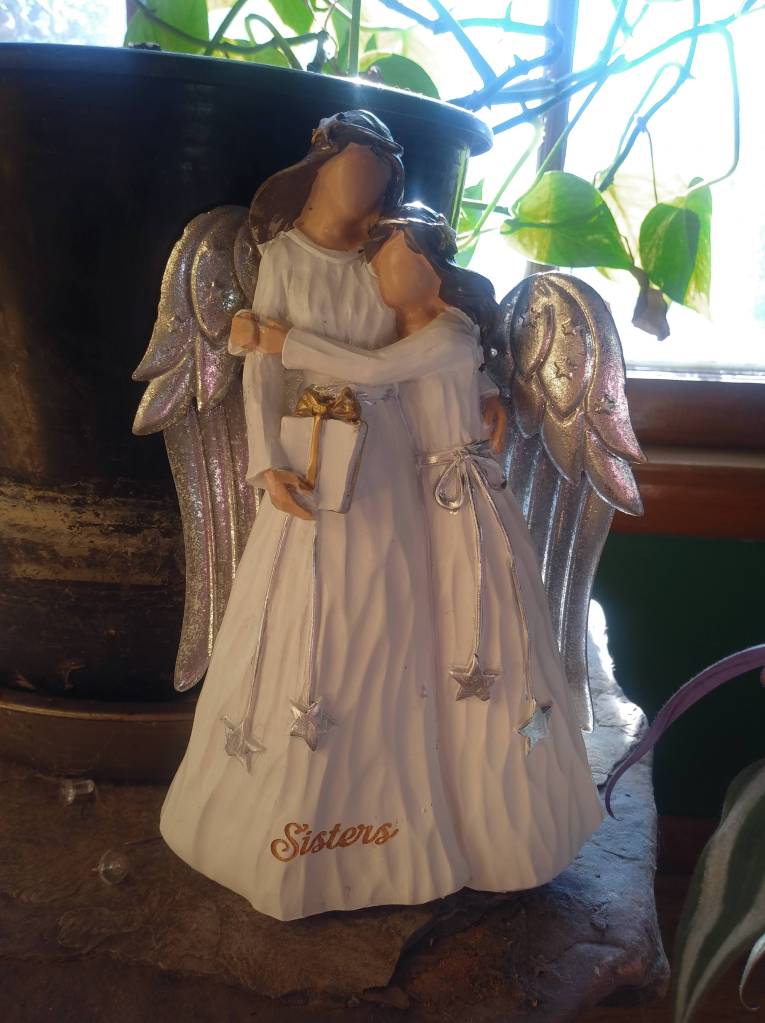
Photo of the Week: “Sisters.” This figurine was a gift from my sister. She is seven years older than me. We have had times of contention, times of love. It is a bond unlike any other.
When I was little, she would play House and Barbies with me. She improved my dog costume for my preschool play by adding strings from the tail to my “paws” so I could make my tail wag. We shared a room and would play “hide-the-glowing-rosary” when we were supposed to be falling asleep.
She went away to college when I was entering sixth grade. It was agonizing for little Gail. My playmate and confidante was gone. These were the days of long-distance phone charges, so I did not speak with her often, though we did write letters.
As we grew older, we had different experiences–living in different places, husbands, children. Different opinions developed.
As the younger sister, I found that I viewed her as an authority in my life rather than as a peer. I found myself trying to live up to what I thought were her expectations, while going against my own expectations.
Eventually, the rift in our relationship grew larger. Neither of us felt emotionally safe with the other. We both felt like we were being judged. Our conversations were stilted, neither of us sharing our true selves.
But things have changed and now we are growing closer again. How? Through intention. We acknowledged that we love each other. That is the foundation. We definitely still have different opinions. However, we are choosing intentionally to see each other through the lens of love. This was an actual, concrete decision. We intentionally make time to visit each other–alone–every couple of weeks or so. We intentionally try to be honest about our thoughts and intentionally listen deeply–knowing the other is not a monster. It is hard sometimes. It is scary sometimes to be vulnerable. To be truthful. But both are required.
How have you worked toward healing a relationship? What has helped you?
Photo of the Week: Sunrise. Several years ago, I trained myself to be a morning person. For most of my life, I had a sense of dread when I woke. I felt an immediate surge of adrenaline, a feeling of “what am I already behind on?” or “what scary thing do I have to face today?” It was truly horrible.
At one point, I decided that I wanted time before I went to do the first dreaded thing. I thought that maybe if I had peaceful, maybe even happy, time before the thing, I would feel better. I thought maybe if the thing was a part of the day but not the first thing of the day, maybe it would seem less overwhelming. That is how it worked out for me.
The way I trained myself was that I decided to give myself two hours (!) before I had to leave my house. I went to bed eight hours before, which did give me an early bedtime (!). It was uncomfortable at first to lose late nights. I had been a night owl. Then I PACKED my morning with things I liked. I lit candles to make it cozy. I played gentle music I liked. I had coffee. I read or did other things I liked. Eventually, I added exercise. But, if you are trying this transition, at least at first only do things you enjoy. If you enjoy exercise then add it right away!
It really did not take long for the adjustment because I made the morning so nice. At this point, I wake up naturally by 5am. I go to bed around 9pm. I find that I wake at this time even if I do go to sleep later. I also let myself take a thirty minute nap sometime if possible. Sometimes I do afternoon tea or coffee.
The point is, if you are trying to make a change, try using gentleness and things that bring you joy. Maybe you want to add exercise, for example. Try doing something that feels good for exercise. Or if nothing feels good, try surrounding the exercise with things that bring you joy–good food, music, some activity that you do enjoy.
It seems simple. I find that many people I have known though, including myself, have tried to bully their way into a new habit. We have tried talking cruelly to ourselves, saying to “stop being lazy.” Or we have tried to be really strict so that a “failure” is met with self-punishment.
In social work, counseling, education, and other areas, there is a notion of “trauma-informed care.” Trauma-informed care is defined as practices that promote a culture of safety, empowerment, and healing. Life is hard. There are small difficulties, and sometimes large difficulties, in every day. Give yourself trauma-informed care. Be gentle and encouraging with yourself.
Even the attempt to heal an aspect of your life is a step. It is something to be celebrated. What is something you have done that was a struggle but worth it? How did you do it? What is something you are trying to change?
Photo of the Week: Zoot. Zoot was a black cat we had for several years. When we got him from the shelter, they said he had been there for months. They said people do not adopt black cats as readily as other cats. They felt that superstition was the reason for the stigma.
“Stigma” means “a mark of shame.” Going to therapy, for many people, carries a stigma. It seems that emotional problems are often considered to be shameful or moral failings. In my experience, people often feel as though they should be able to “get over” past traumas or current painful experiences. There seems to be a perception that talking with a professional means that you are being weak.
Being in therapy is a vulnerable experience. It can be scary to speak of times that have been painful, or when we may have acted in a way we regret. We may carry feelings of shame. We may feel afraid that if we address certain feelings, those feelings will overwhelm and consume us.
A therapist is trained in helping clients manage shame and overwhelming feelings. Therapy should go at the clients’ pace. That means the client controls when difficult emotions are addressed, which should be when the client feels trust in the counselor. Counselors are trained to withhold judgment. We are trained to see each client as an individual with unique circumstances. We view each client through the eyes of empathy. Our job is to help the client look at themselves with curiosity rather than judgment. A therapist creates a space that feels safe enough for the client to gently move into vulnerability so that healing may begin.
If you do not have this experience with a particular therapist, it is okay to end that relationship and search for someone who feels safe. Therapists are aware that this will happen. No therapist is a good match for every individual.
If you are considering counseling, test the waters. Contact a therapist and interview them. See if you feel comfortable with them. You do not have to wait until you feel “bad enough,” are overwhelmed, or are losing relationships. Therapy may help you avoid reaching a devastating situation. It can help you manage life better. Coping skills and talking through situations can help you to live the life you want to live. Therapy can help you see patterns and help you learn new ways of living.
Stigma can stop us from enjoying experiences in life that may be enriching. I encourage you to reach out for the life you want. You do not have to suffer alone. If you have questions about how therapy works, feel free to contact me.
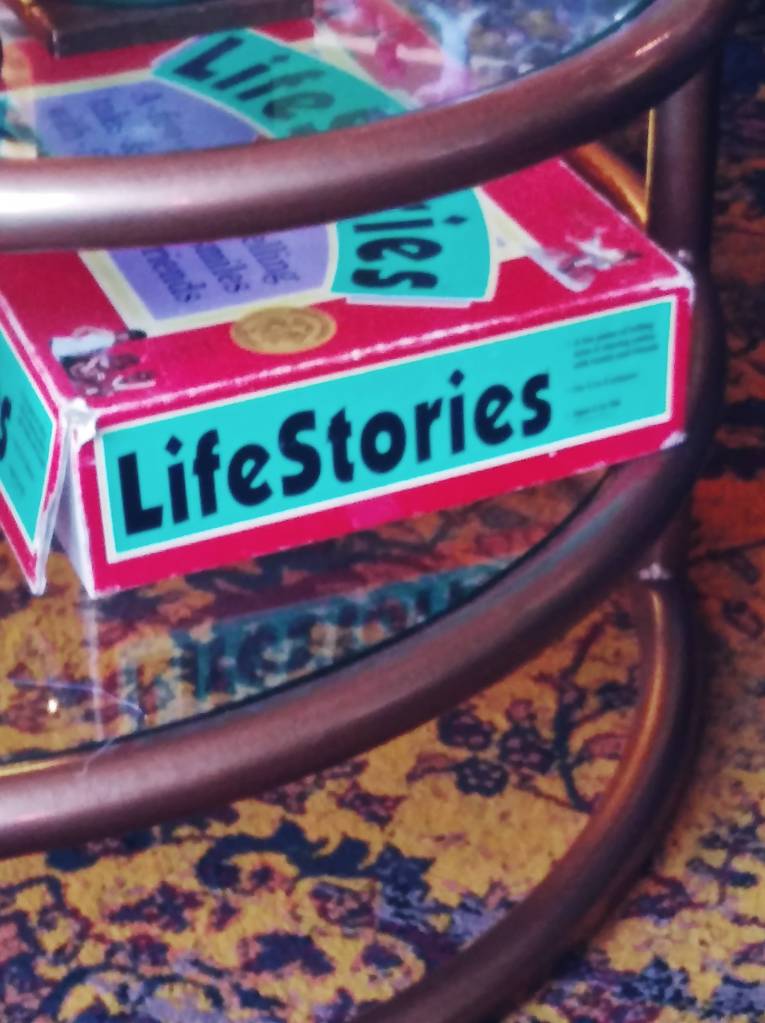
Photo of the Week: Tattered game of Life Stories. Life Stories is “a fun game of telling stories with family and friends.” It has four types of questions: Etchings (questions about interests), Valuables (questions about things you value), Memories, and Alternatives. No one wins or loses–you just go around the board asking and answering questions about each other. I have found that some love this game; others hate it.
Recently, I finished reading the book “Man’s Search for Meaning” by Viktor Frankl. He was a therapist who survived the Holocaust. The book tells his story through the therapist’s lens. One idea I took away from the book was that the goal of life is not simply to be happy, but to have meaning. It seems that a sense of meaning is what helped him survive the concentration camps.
Lately, I have encountered several people who have gone through painful, major life changes. They are in a transitional space where they have lost what they once thought was their meaning, and have not yet found a new meaning. This can be a devastating space to be in.
How does a person begin to find meaning? I think there are many, many ways to do this. However, I think of Life Stories. Those four types of questions can be a guide–what are your interests (hobbies, inclinations); what do you value (what draws your concern when you listen to the news, what makes you brighten up); what are your memories (what do you remember caring about when you were younger, what injustices do you remember experiencing); alternatives (how do others see these things in you if you cannot get in touch with these things yourself). When we look at these questions, we can discover meaning. For example, what is the underlying reason you used to enjoy serving meals at the soup kitchen? Was it a love of serving? Was it a love of being around food and gatherings? Be curious about your life.
In my own life, my meaning has changed over the years. Sometimes meaning can be swept away abruptly. At those times, hold on. Breathe. Meaning can come back. I think that sometimes, our meaning is like winter. It appears that things are dead, but it is an important stage that generates new life. We see this happen in nature. We are part of nature. Happiness isn’t enough, but it can be an indicator of your deeper meaning.
What is meaning for your life? How have you found it?
Photo of the Week: Doorknob. Doors. Portals. “When one door closes, another opens.” “Opportunity only knocks (on the door) once.” “Leave your problems at the door.” “Don’t let the door hit you on your way out.”
Doors represent opportunities for change. When you go through a door, you enter a new world–whether your front door, or even a closet door. We close doors–shutting out possibility, for better or worse. We open doors–inviting possibility, for better or worse.
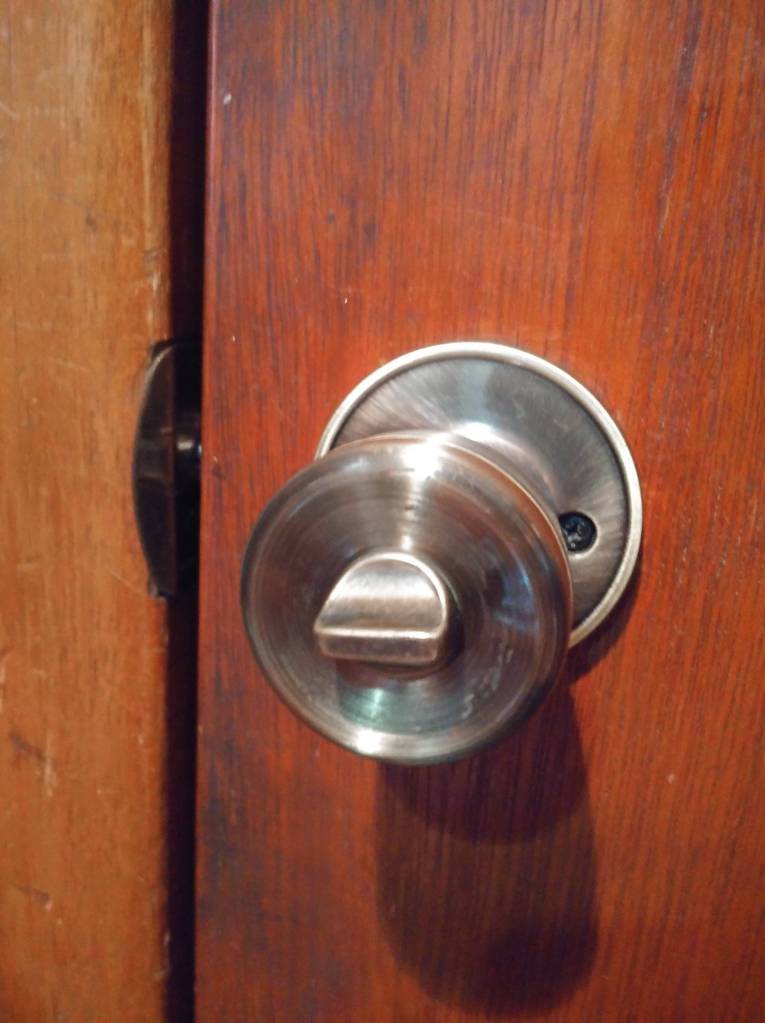
The doorknob in the photo is tempermental. To close it well, the doorknob must be turned and closed gently, then a gentle push on the door will make it latch. One would think that closing the door by pushing or pulling hard on it would make it latch. But, inevitably, the house shifts, and it opens. Being that this is the door to the garage, it opens to an unwanted opportunity at inconvenient times.
Opportunity in life can be like that. It can show up at inconvenient times, when you aren’t ready. And it may be time to gently, yet firmly and assertively, close the door so that YOU decide when to open to the opportunity. Slamming the door will only make it pop open again when you don’t want it to. It is counterintuitive. Aggression tends to have unwanted outcomes. Assertiveness, decisions made with control, tends to make things go better.
What are the doors of your life? Do we recognize that every time we open or close a door we are working with possibility? Closing a closet door after I have chosen a shirt to wear is a decision that I have committed to. Opening the front door to go to work is stepping into the world with all of the unknowns–for better or worse. It is a commitment to facing adventure. Opening a door to allow a visit from a friend is inviting opportunity for growth. Locking the door before going to sleep is to prevent unwanted opportunity.
When I was little, if I was upset, I would run to my bedroom and slam my door. My father would sometimes come and I would be in trouble. Slamming that particular door caused the trim to separate a bit from the wall. Slamming that door, aggressively shutting out my family, damaged the house, my home, my place of belonging. It was too much. However, firmly and assertively closing the door led to privacy and left my home intact. It gave a space for healing from the frustration rather than heaping problems–not only did I have the frustration that led to the slamming, but then I was also in trouble and had to deal with that.
What doors are in your life? How do you handle the opening, closing, locking? What insights can you share?
Photo of the Week: Green leaves. I took this photo on a frozen December morning. It had been below freezing for several days and I was fascinated by the fact that this plant still had green leaves. Someone told me that it may be because the leaves on the ground kept the roots warm.
Whether that is true or not, it made me think. It is a wonderful metaphor! The dry, dead leaves that have fallen to the ground, protect the roots from freezing and damaging the above-ground leaves of a plant so it can continue to produce and clean the air. Often, “roots” metaphorically means the foundations of our lives–the core of who we are. Dry, dead leaves are often considered to be waste.
Ralph Waldo Emerson said, “…the whole of nature is a metaphor of the human mind.” So, I would say that a lesson of the green leaves is that, if we value the “waste” experiences–the mistakes, the failures of our lives–as learning experiences, these experiences can be used to protect and nourish the core of who we are. Then, we can continue to function and contribute even in the harsh climates of life.
I think part of the lesson lies in the way a person uses the dead leaves of life. Sometimes, the dead leaves smother plants when the weight of the leaves snuffs out the oxygen the plant needs. What can a person do when the weight is too much? Some people rake leaves to protect grass. To me, this means allowing others to help when you are feeling crushed by life. Other times, plants will, in a way, “hibernate” until the crushing leaves dry up and blow away. This shows that there are times to wait, to care for the self quietly until the circumstances shift.
Maybe, when feeling stuck, maybe a good thing to do is to look to nature. How does nature heal itself? After all, we are nature, too. What do you think? What truth have you found in nature?
I used to think that, because healing is such an individual experience, there could be no “definition” of what it meant. When I read what Dr. Dan Siegel said about FACES (flexible, adaptive, cohesive, energized, stable), I changed my mind. To me, flexible, adaptive, cohesive, energized, and stable thinking/feeling, is thinking/feeling that is healthy. It is the ability to move with circumstances, the ability to experience your feelings while maintaining your sense of self.
I think it is a goal that is sometimes momentarily attainable, sometimes partially attainable, and sometimes out of reach.
When I work with a client, how this looks to them in their life is what is important. It seems that the goal a client sets is always some variation of FACES. “To feel joy;” “To not be so overtaken by depression;” “To grieve.” These are all requests to move through life gently, passionately, peacefully.
As a therapist, I see people–and I have experienced in my own life–approach the goal, back away from the goal, approach, back away, etc. I think this happens because healing can be scary for many reasons. Pain can become familiar. Pain can feel more stable, like there is nothing to lose, unlike with happiness. Pain can even allow us to stay in relationship with those who would not know how to relate to us if we changed. Pain can, in a way, be safe.
Healing is an ongoing process. Be compassionate with yourself. Reach out to others when you need to. Celebrate movement toward healing.
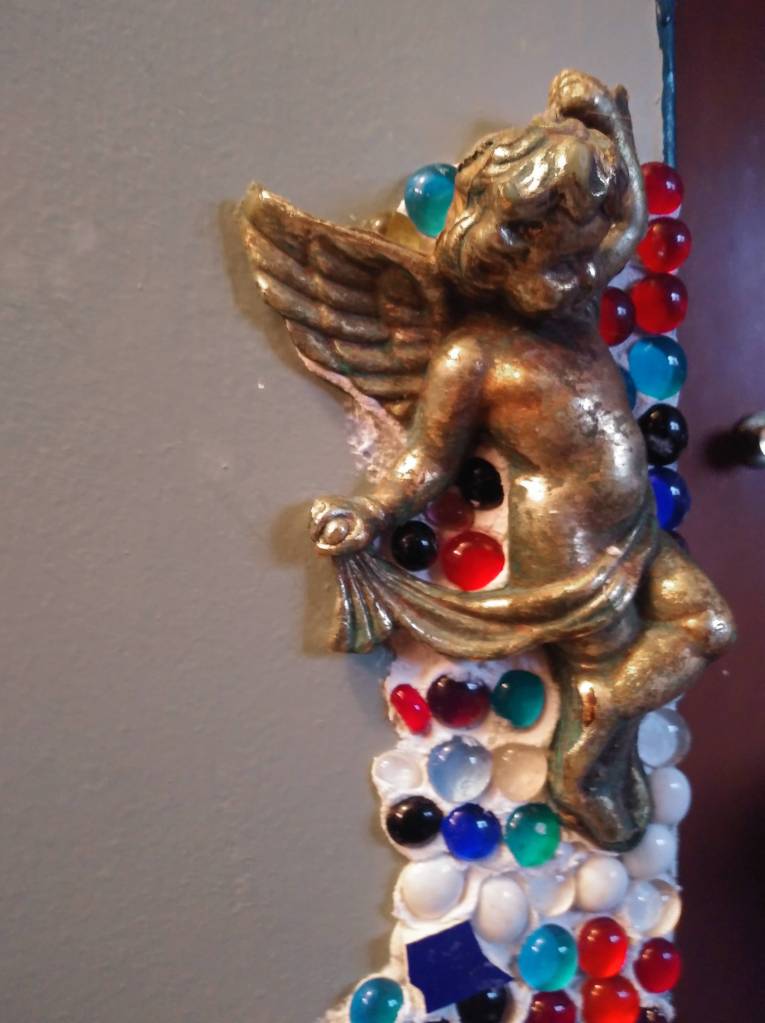
Photo of the Week: Angel. In some cultures and communities, angels are beings who are messengers or protectors. They provide guidance for the difficult journey that is life.
Whether we believe in angels or not, is kind of beside the point. We humans look for guidance, from angels, friends, teachers, signs, etc. We do not always accept the guidance. So, ultimately, it comes to a person’s own intuition and discernment.
How do we decide what to do in life situations? How do we know when to follow someone’s advice? Or forge our own path?
Generally, we have desires, hopes for particular plans to work out. Sometimes, those plans slam into dead ends. We have to decide whether to pursue the plan or go a different direction. The language we use in our minds matters. We may say “If I quit, I am giving up. And I’m not a quitter.” Or maybe, “This isn’t for me. Good things don’t last for me.” Both statements indicate a value judgement of ourselves. A statement of our worth is being made. So, sometimes our decisions are made based on what we believe about ourselves, a deep rooted, core belief, more than what may be best in the situation.
So, how to decide what to do? There are many factors to consider. One way of making a decision is to pay attention to what really energizes you. Use your imagination to see as many options as possible. For example, maybe you are trying to decide if you should take a particular job and are hesitating. It seems at first like either you take it or you don’t. But there may be additional options. Think creatively about whatever causes the hesitation. Maybe you could take the job, but start in a month rather than now. Maybe you could see if you could work from your home sometimes. Maybe you could not take the job, but could consult or volunteer. Whatever is causing the hesitation, use your imagination about it. What options energize you? Maybe it would be a pay cut, and you have bills to pay, but you could adjust your budget and make it work. Or take on a side hustle. If the idea of the job really energizes you, you may not need to spend so much on entertainment because you just feel better. Feeling energized, feeling good, in an important area of your life will affect other areas of your life.
I do not mean that a person should neglect responsibilities because something seems fun. I am suggesting that there may be more creative ways to meet responsibility. I also am not meaning “fun” when I speak of being energized. “Energized” here means an internal motivation that is peaceful and provides a sort of lift to your being. Not an adrenaline burst because you are doing something that will hurt others.
I have found in my own life, and through talking with others, there are times when we almost cannot not try for something. At those times, again, be creative. Open your options to possibility. But here, it is important to also see reality as it actually is. If a person, for example, tells you “no,” that is not an invitation to pressure them, whether an individual or an organization. Accept reality as it is and see what other possibilities open up. You may be blocking other opportunities by being too single-minded.
So, in making decisions, pay attention to what is energizing and accept what is reality. These are hard things sometimes. Be patient and compassionate with yourself. Personally, I don’t believe opportunity only knocks once. I believe it knocks in different forms many times.
What do you think? What contributes to your decision making?