Are you a couple, adult or teen who is feeling overwhelmed and searching for healing? Therapy can help. I practice Emotionally Focused Therapy and EMDR. Therapy here is secular, but affirming of faith/spiritual practices. All are welcome. Your identity is important.
I used to think that, because healing is such an individual experience, there could be no “definition” of what it meant. When I read what Dr. Dan Siegel said about FACES (flexible, adaptive, cohesive, energized, stable), I changed my mind. To me, flexible, adaptive, cohesive, energized, and stable thinking/feeling, is thinking/feeling that is healthy. It is the ability to move with circumstances, the ability to experience your feelings while maintaining your sense of self.
I think it is a goal that is sometimes momentarily attainable, sometimes partially attainable, and sometimes out of reach.
When I work with a client, how this looks to them in their life is what is important. It seems that the goal a client sets is always some variation of FACES. “To feel joy;” “To not be so overtaken by depression;” “To grieve.” These are all requests to move through life gently, passionately, peacefully.
As a therapist, I see people–and I have experienced in my own life–approach the goal, back away from the goal, approach, back away, etc. I think this happens because healing can be scary for many reasons. Pain can become familiar. Pain can feel more stable, like there is nothing to lose, unlike with happiness. Pain can even allow us to stay in relationship with those who would not know how to relate to us if we changed. Pain can, in a way, be safe.
Healing is an ongoing process. Be compassionate with yourself. Reach out to others when you need to. Celebrate movement toward healing.
What are your favorite memories? The first that come to mind for me are of parties or camping or hiking. What first comes to mind for you? Moments with loved ones? Moments spent alone? How did you feel in those moments? Happy? Accomplished? Strong? Loved?
I have heard people say when they are stressed, they go to their “happy place.” This, honestly, always seemed ridiculous to me. How could a memory or imagination ease stress?
I discovered that, for me, there is a different type of memory that actually does help me relax. It is a kind of sensory memory. I have memories that I would never have considered to be “favorite memories” or even “favorite places.” But something about these memories relaxes my muscles, transports me in a way.
One example is from my childhood. I remember lying in my bed on summer evenings. It would be hot and the window would be open. I can remember the sound of bugs outside and the sound of the neighbor’s air conditioner running. I can recall those sounds so clearly and I can feel my muscles relax.
Another memory that relaxes me is from a hike years ago. I was walking in the mountains in southern California. I dropped my backpack and leaned against it on the ground under a tree. I can recall the feel of the warm sun, the smell of the sandy dirt and pines, and the sounds of the stillness in the air and occasional breeze. Again, I feel my muscles relax and a peacefulness settle in.
So, I think that if you have trouble going to your “happy place,” try thinking of an unexpected happy place. Try to remember a moment that was peaceful. One that brings to mind sensory memories.
Please share. Where have your happy places been? What are your peaceful moments?
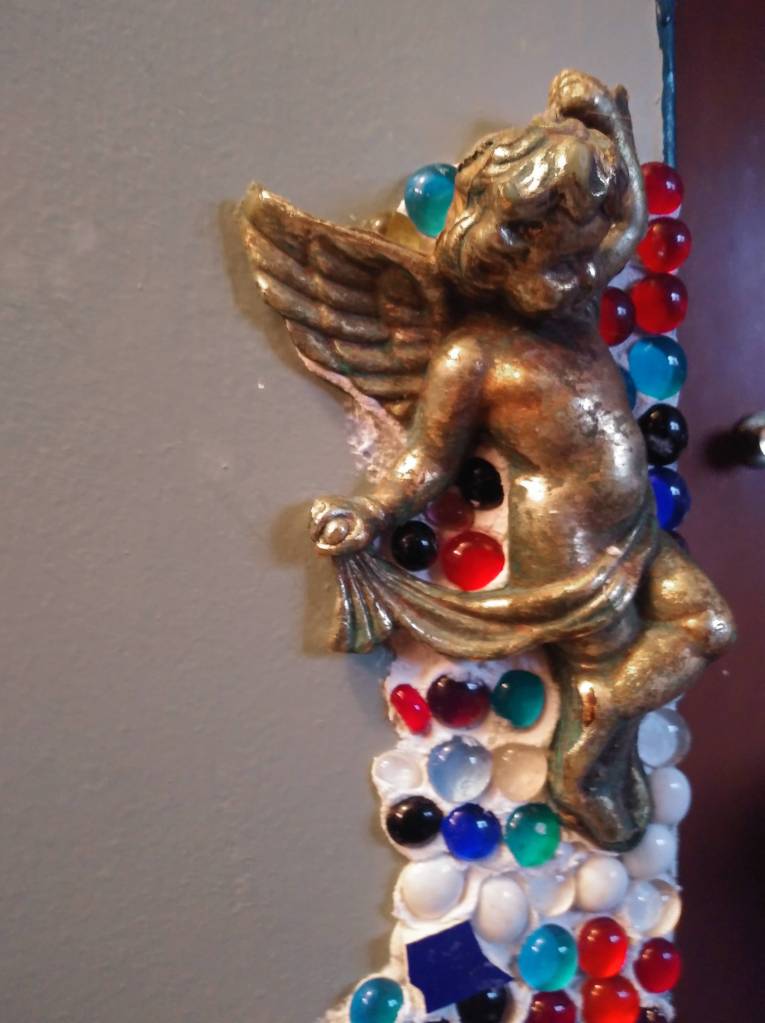
Photo of the Week: Angel. In some cultures and communities, angels are beings who are messengers or protectors. They provide guidance for the difficult journey that is life.
Whether we believe in angels or not, is kind of beside the point. We humans look for guidance, from angels, friends, teachers, signs, etc. We do not always accept the guidance. So, ultimately, it comes to a person’s own intuition and discernment.
How do we decide what to do in life situations? How do we know when to follow someone’s advice? Or forge our own path?
Generally, we have desires, hopes for particular plans to work out. Sometimes, those plans slam into dead ends. We have to decide whether to pursue the plan or go a different direction. The language we use in our minds matters. We may say “If I quit, I am giving up. And I’m not a quitter.” Or maybe, “This isn’t for me. Good things don’t last for me.” Both statements indicate a value judgement of ourselves. A statement of our worth is being made. So, sometimes our decisions are made based on what we believe about ourselves, a deep rooted, core belief, more than what may be best in the situation.
So, how to decide what to do? There are many factors to consider. One way of making a decision is to pay attention to what really energizes you. Use your imagination to see as many options as possible. For example, maybe you are trying to decide if you should take a particular job and are hesitating. It seems at first like either you take it or you don’t. But there may be additional options. Think creatively about whatever causes the hesitation. Maybe you could take the job, but start in a month rather than now. Maybe you could see if you could work from your home sometimes. Maybe you could not take the job, but could consult or volunteer. Whatever is causing the hesitation, use your imagination about it. What options energize you? Maybe it would be a pay cut, and you have bills to pay, but you could adjust your budget and make it work. Or take on a side hustle. If the idea of the job really energizes you, you may not need to spend so much on entertainment because you just feel better. Feeling energized, feeling good, in an important area of your life will affect other areas of your life.
I do not mean that a person should neglect responsibilities because something seems fun. I am suggesting that there may be more creative ways to meet responsibility. I also am not meaning “fun” when I speak of being energized. “Energized” here means an internal motivation that is peaceful and provides a sort of lift to your being. Not an adrenaline burst because you are doing something that will hurt others.
I have found in my own life, and through talking with others, there are times when we almost cannot not try for something. At those times, again, be creative. Open your options to possibility. But here, it is important to also see reality as it actually is. If a person, for example, tells you “no,” that is not an invitation to pressure them, whether an individual or an organization. Accept reality as it is and see what other possibilities open up. You may be blocking other opportunities by being too single-minded.
So, in making decisions, pay attention to what is energizing and accept what is reality. These are hard things sometimes. Be patient and compassionate with yourself. Personally, I don’t believe opportunity only knocks once. I believe it knocks in different forms many times.
What do you think? What contributes to your decision making?
Photo of the Week: Coulter Pine Cone. At first, this pine cone looks fierce! It looks like it has claws out to hurt anyone who comes near! The scales of a pine cone are its boundaries. It is protecting its seeds and can open or close depending on the environment.
Sometimes enforcing our own boundaries can appear like ferocity to those around us. I once heard someone say that they thought boundaries were not needed in romantic relationships. Their view was that boundaries are used only to keep people away. My response was that I see boundaries as a way to ensure that I maintain my authentic self.
When I am maintaining my authentic self, I do not become enmeshed with others, taking on too much of their emotional work, not seeing where they end and I begin. When I am maintaining my authentic self, I am not alone in the world, walling people out because of fear. When I am maintaining my authentic self, I have a clear vision of who to let in and how much, what to share of myself.
This can be very difficult. Sometimes I make mistakes, boundaries too high or too low. I have come to realize, though, I can readjust the boundaries.
For me, an indicator of boundaries that are too high or low is the presence of anxiety. Sometimes it means I am putting in too much work into a relationship, taking on what I think are their expectations rather than my own values and expectations. Other times, I may feel like an outsider, removed from the group, not sharing enough because of fear or insecurity.
When these things happen, I breathe and remember who I am. I try to reconnect with my core, my values, my truest self. Breathing slowly really does help me to do this. It also helps if I can physically remove myself for a moment from the situation. If I cannot, I think of transcendence, that this is one moment in time, that I am loved, or other positive, grounding thoughts. I remember that we are all connected as struggling human beings.
How have you adjusted your pine cone scales? How do you readjust?
P.S. The Coulter pine cone can weigh over ten pounds! It has serious boundaries!
Photo of the Week: Afternoon coffee. I am generally a morning person (after much training). I used to be a night person. I have never liked afternoons, when I feel a little tired or drained. My energy level is high in the morning, low in the afternoon, and comes up a bit in the evening until time for sleeping.
Today started out good, but I gradually became more anxious and felt kind of down. I felt like my energy level was spiraling. I could not think of a way to salvage the day.
Until I remembered afternoon coffee.
This is not a push for caffeine. Rather, it is a push for re-calibration. To adjust; to start over. I took a nap and drank an afternoon coffee. I created a new morning. My energy level came back up and my anxiety faded. When I cannot take a nap (which is, admittedly, luxurious), I have still had an afternoon coffee or tea and created some type of break. Maybe just leaving my desk and gazing out a window. This has been enough to simulate a second morning.
How did this work?
I think the reason this can be effective is more mental than physical. I interrupted the path of the day. I had been feeling stuck in the “I shoulds.” So, I created a break which caused a perspective shift.
If you are an evening person, maybe you like the coziness of low lights, for example, you could create a break and simulate a new evening. You could do something that you normally do in the evening, or you could do something to create the evening atmosphere.
Today, I am having two mornings and an evening. I am mentally skipping afternoon. How have you re-calibrated when you have had a day that was not going well?
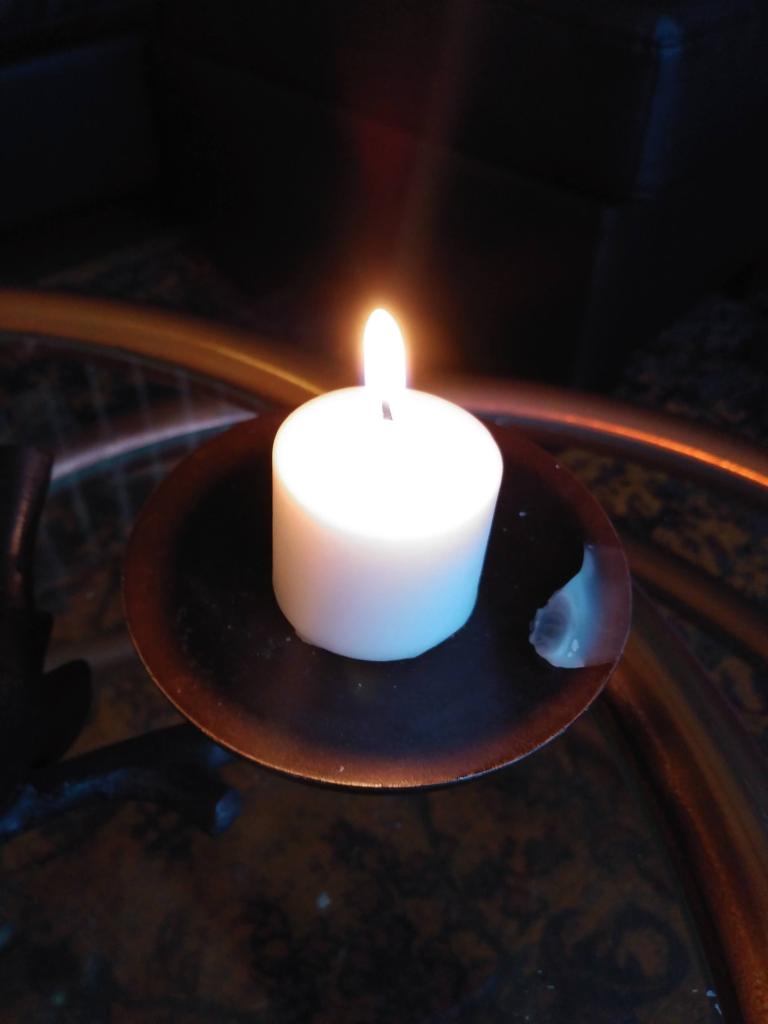
Photo of the Week: Candle. I burn candles even during the day when the sun is shining in my windows. It helps create a cozy atmosphere that I love. I do not wait for “special” times to come. I finally learned through hard lessons, that special times can be much more often if I am mindful.
Years ago, when my boys were young, I would hear their children’s music, and I would get teary. A sadness, or melancholy, would well up inside. It was not about the passing of their childhood. It was not about time moving quickly. It was something else that took me a long time to figure out.
But I did figure it out. It was the longing for a sense of safety and security that that music seemed to evoke. I was a children’s librarian at the time, and the storytimes I would create were warm and full of joy. When I was with those children and my own children, I tried to create a safe, unconditionally loving place for them.
The longing was because I did not feel that in my own adult life. I felt vulnerable as an adult, aware of my weaknesses, fearful of criticism, continually exposed and found lacking. Adulthood felt like continuous responsibility for so much that I felt longing for a place that felt loving and warm to me. I did have friends and family who loved me, but somehow, I could not deeply sense the safety and security I realized I wanted.
Once I figured out what the longing and anxiety was from, I felt empowered to do something about it. It took time and hard internal work. For me, it required a therapist. Gradually, I came to realize that I had a core self that was safe. I realized that I could create my own feeling of warmth and coziness for myself. I surrounded myself with objects like candles, music that felt good, and people who built up my energy rather than draining it. I learned to be present to those things.
There are still times when I feel as though I am in a cold place or with those who would criticize or threaten my sense of self. For those times, I simultaneously remember my core of safety and those who love me. I choose my defenses, my boundaries. It is not perfect. I sometimes still feel very anxious and an unpleasant vulnerability. (Not the vulnerability that leads to connection.) The difference is that now I know I will leave that space and have my own warmth to come back to.
Do you feel safety in your life? What makes you feel secure? How did you find it?
Many of us feel alone. We feel as though we are not known and not deeply loved by those around us. As a counselor, I see many people feeling intense anxiety and depression, feeling trapped and unable to make a committed move in any direction. I see people who have experienced trauma at the hands of those who should have loved and who then do not have the support to pick up the pieces. This experience often leads to painful relationships, violence, suicide, and other difficult reactions. I hear this pain in the lyrics of music and I see it played out in stories in books, television, and movies. People are suffering.
How do you form a deep connection? How do you develop trust yet maintain boundaries? How do you stop feeling so alone?
I can only speak from my experience. And I would like to hear your experience.
For me, I have to find the ability to open to trust. This starts by connecting with my belief that we are all in this together, struggling to figure out life. Once I connect with this belief, I have to connect with the belief that I can handle being hurt. This takes a leap. I may not be hurt if I risk allowing someone in, but if I am hurt, I have handled deep pain before. I consider that it is worth it. Because I do, indeed, believe that a true deep connection is worth it.
If I am in a space where I feel that “we” (people in general) are on the same side and that I can handle the potential hurt, then I am ready to be somewhat vulnerable with someone. Not everyone. I pay attention to cues: are they humble? Do we seem to have similar values? Then I proceed with vulnerability.
How do you “be vulnerable?”
I start with being deeply present. Letting myself get caught up in what they are saying, rather than preparing my next statement. This may mean there could be a silence, and that is ok. (It takes practice to become more comfortable with silence.) Then I share my thought or feeling from a true space within. I may disagree with them. I may agree. I may offer an experience of my own. I may ask curious questions. I listen with a stance of curiosity rather than from a stance of judgement or defense, waiting to catch them being wrong or trying to hurt me. I allow–allow–my heart to feel a connection.
I have often been surprised that a conversation may go to a deep place quickly. But a connection from vulnerability is not the same as “defended exposure.” Defended exposure means “I will tell you something from my life that seems vulnerable, but is really from a cognitive, rather than feeling, place.” To connect, allow feelings to come forward. Speak from feeling rather than from logic and intellect only.
All of this is hard and takes time. Also, this is only my experience of one way to form connection. What do you think? How have you made your strongest connections? Also, what stops you from connections sometimes?
Photo of the Week: Fallen Leaves. One day, I was sitting outside during an unseasonably warm autumn day. I looked down to my right and noticed the texture and color of these leaves. I snapped a photo and now it is a photo I love.
Last week, I did not write my usual blog post. My energy was low; my mood was low. So, I decided to let it go. It was difficult to let it go, but I think it was a good decision. I have spoken to my sons about learning when it is good to push yourself, and when it is time to let something go. It is about learning to trust yourself and evaluate what is going on inside. I do not think pushing myself would have been a “wrong” decision; just a different decision. It isn’t always a choice between right and wrong. Sometimes, maybe most of the time (?) just a choice of possibilities. I think that what would have been “wrong” would be to berate myself over my choice. Not “wrong” but unnecessary and painful.
While I was feeling low, I experimented with being gentle with myself. The low feeling lasted two days. That is much less time than such low times have lasted in the past. I am not sure why it was only two days. Medication? The fact that I have aged and have a different perspective? The support of a loved one? I am not sure. I think, though, that it helped that I allowed the feeling. I stopped myself when I felt myself pushing against the feeling. I was disappointed that I had the feeling. It was interrupting my cherished weekend time. I tried to accept that this was how I felt at the time and I allowed naps and low energy activities without self-criticism. Looking back, I think that contributed to the mildness of the low feeling.
So, the photo of the leaves. I used this photo today because I was thinking of the times when my low was much lower than those two days. There are times when a person cannot feel joy. It takes energy even to breathe, to sigh. One thing that has helped me is to slow down and also to notice detail. I slow down because that is the energy level I have at those times. I notice details, like those of the leaves. I notice color, texture, shape. I do not even put on the pressure of trying to appreciate these things. I only notice. I may look for things of a particular color. Or things with a curve. Or things with a certain shape. It is partly a distraction. Partly a grounding into the present. It is a way for me to order my brain. That is what it feels like. That order brings a feeling of calm.
What has helped you when you have felt low? How have you made it through low times?
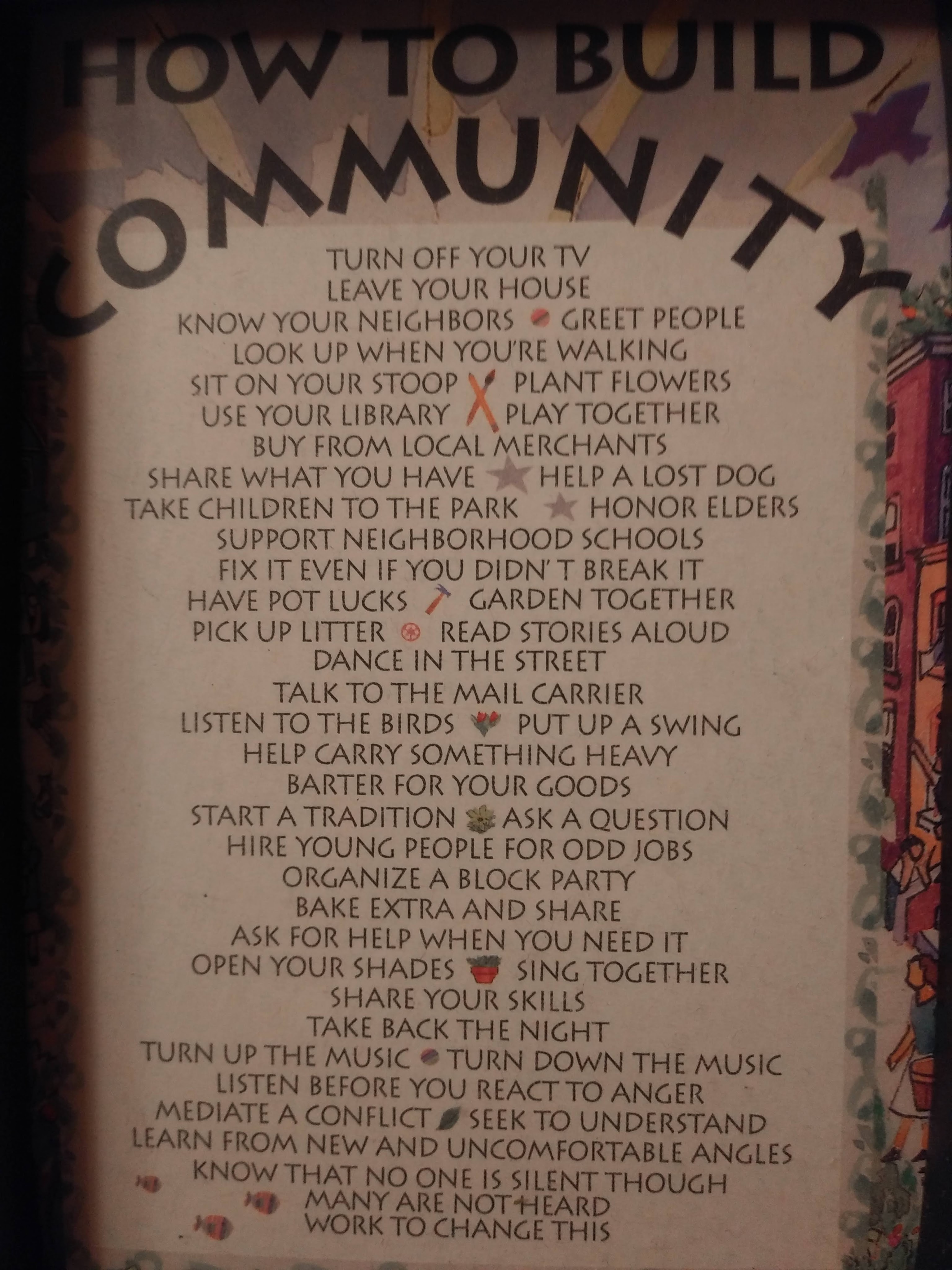
Photo of the Week: How to Build Community. I found this postcard in a little shop in New Mexico. I do not usually buy decorations with words, but this one caught my attention. The ideas for building community are unique. I think, if done with intention, these ideas really could be effective.
We are in the holiday season. This is a time that can be difficult for people–people who have painful memories, lack connection, or feel overwhelmed. This time can feel very pressured with the high expectations that can surround us.
Along with boundaries, which I wrote of in another blog post, a person needs connection. If this time of year is difficult for you, building new connections with others and within yourself can be helpful. For example, as the card suggests, “Open your shades,” literally and figuratively. This is a call to be open to new experience, and to show that openness to others. Draw back your curtains to let in light, and also open your eyes and give even the hint of a smile to others, rather than being lost in thought with downcast eyes. This may sound simple, but can seem scary. Forming connections can make a person feel vulnerable. Remember that you can take your time in building connections.
Another way of building connections at this time is within yourself. For example, slow down. Notice what is around you. Let yourself appreciate that the chair near you has a beautiful color. Or remember that that piece of art was a gift from someone who cares for you. You may not be able to feel appreciation immediately, but taking the time to notice what is around you can bring you closer to experiencing your own connection to joy.
Stepping out and forming community can be hard. Be gentle with yourself and appreciate your efforts. Even a new thought is a step forward, it is movement toward forming the connections we all need.
How have you learned to reach out, or to go within to form a better relationship with yourself?
Today is Veteran’s Day; Tuesday was Election Day. It is a patriotic week. It is a week to celebrate the varied ways people serve this country. How does patriotic experience intersect with mental health?
Much has been said and written regarding the mental health of veterans returning from combat. Combat takes a heavy toll on veterans as well as their loved ones. If you are a veteran or a loved one who is struggling, you can reach out here (https://www.va.gov/ve/myva411.asp) for help. Please do not hesitate.
Mental health and global citizenship intersect in other ways, too–stressors from reading and watching news, personal experiences of systemic oppression, even the reactions of friends and family members. It seems that even those who “don’t want to get involved” in politics or world events, find themselves affected by both. The political finds its way into the personal.
What are ways of handling such stressors?
–Involvement. Voting, helping with campaigns, even writing essays for publication, can give a sense of empowerment.
–Support. Choosing organizations to donate money to is another way of making your voice heard.
–Art. Creating music, visual art, and performance are powerful ways of expressing ideas. Share your creations with others.
–Nature. If you have ever paid attention to the natural landscape while traveling on a long journey, you may have noticed the changes, perhaps from mountains to desert to plains. Contemplate how the natural surroundings affect people now and historically. This can give a broader view when feeling “stuck” in current events.
–Open your mind. View artistic creations made by people who are culturally different from you. This group (https://theaterofwar.com/), for example, creates performances of ancient texts with people who are struggling due to political, social, or environmental situations.
–Run. Or walk. Many communities have frequent 5k runs/walks that raise money and awareness for different social concerns.
–Listen. When speaking with someone who has a different political or cultural experience, try to listen more than you speak. Listen deeply for the concerns under the words. This can deepen understanding and connection.
–Limit. Set boundaries. Protect your mental and emotional space. Limit the amount of news and difficult conversations you have. Awareness is important. So is keeping yourself emotionally safe. Only when you have energy can you have empathy. When we are too drained, apathy rises.
What other ways have you found to handle the anxieties created by social, cultural, and political stressors?



 Connections